Data-Driven Hiring Guide for HR Professionals
Data-Driven Hiring Guide for HR Professionals

Data-driven hiring is the systematic use of analytics and measurable metrics to guide recruitment decisions, replacing gut instinct with evidence-based processes. This approach is the foundation of modern talent acquisition, and skills-based hiring now drives higher economic growth according to more than 80% of business leaders. That number signals a fundamental shift: the organizations winning the talent race are the ones treating recruitment as a data problem, not a people problem. This data-driven hiring guide gives HR professionals and hiring managers a practical framework to collect the right metrics, build a measurable funnel, apply advanced analytics, and avoid the pitfalls that derail most programs.
What are the essential metrics for data-driven hiring?
The most important recruiting metrics include time-to-hire, quality of hire, source effectiveness, and pipeline conversion. Each metric answers a different question about your funnel, and tracking all four together prevents the blind spots that come from watching only one number.
Here is what each metric tells you and why it matters:
- Time-to-hire: The number of days from when a candidate enters the pipeline to when they accept an offer. A long time-to-hire signals bottlenecks in scheduling, approvals, or offer delivery.
- Quality of hire: Measured by new hire performance ratings, retention at 90 days, and hiring manager satisfaction scores. This is the outcome metric that validates every other decision.
- Source effectiveness: The percentage of hires that originated from each channel, whether job boards, employee referrals, LinkedIn, or direct outreach. It tells you where to invest your sourcing budget.
- Pipeline conversion rate: The ratio of candidates who advance from one funnel stage to the next. A sharp drop between screening and first interview, for example, points to a misaligned job description or a weak screening process.
- Offer acceptance rate: The share of candidates who accept your offer after it is extended. A low rate usually indicates a compensation gap or a poor candidate experience late in the process.
- Cost per hire: Total recruiting spend divided by the number of hires in a period. This metric connects your analytics program to the finance team’s language.
| Metric | What it measures | Warning signal |
|---|---|---|
| Time-to-hire | Speed from application to acceptance | Rising trend over consecutive quarters |
| Quality of hire | New hire performance and retention | Low 90-day retention or poor manager ratings |
| Source effectiveness | Hire rate by sourcing channel | High volume, low conversion from a channel |
| Pipeline conversion | Stage-by-stage advancement rate | Sharp drop at a specific funnel stage |
| Offer acceptance rate | Candidate acceptance after offer | Rate below 80% in competitive roles |
Pairing speed metrics with outcome metrics is the key discipline here. Tracking time-to-hire without tracking quality of hire creates pressure to rush decisions, which produces bad hires that cost far more than a slow search.

How to build a measurable hiring funnel
Building a data-centric recruitment process starts with defining your ideal candidate profile, or ICP. The ICP is a written document that lists the must-have skills, experience levels, and behavioral traits for a role. Without it, every recruiter and hiring manager applies a different mental filter, and your data becomes inconsistent.
- Write a structured scorecard. List five to seven must-have criteria and three to five nice-to-have criteria. Assign each criterion a weight so interviewers can score candidates on a consistent scale.
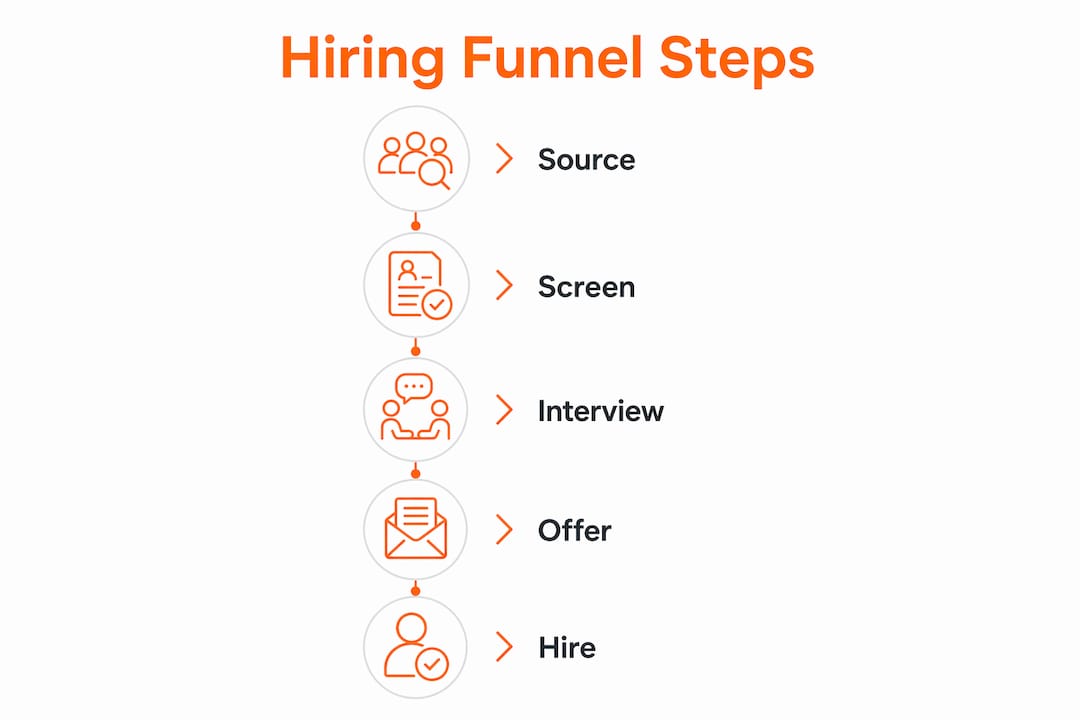
- Document every funnel stage. Label your stages: sourced, screened, phone interviewed, technically assessed, final interviewed, offered, and hired. Count the candidates at each stage weekly.
- Track counts in a shared system. Simple funnel tracking in a shared spreadsheet can identify pipeline leaks without expensive software. Start there before committing to an enterprise applicant tracking system.
- Assign ownership. Each stage should have one person responsible for moving candidates forward and recording outcomes. Ambiguous ownership is the most common reason data goes uncollected.
- Review the funnel weekly. A weekly 15-minute review of stage counts with the hiring manager catches problems before they compound. If 40 candidates were screened but only 5 advanced, the screening criteria or the job description needs adjustment.
Pro Tip: Before buying any recruitment software, run your funnel in a shared spreadsheet for one full hiring cycle. You will learn which data points your team actually captures consistently, and that knowledge will make your eventual software purchase far more targeted.
Effective data-driven recruitment does not require expensive enterprise software at the start. Consistency in tracking funnel metrics matters more than the sophistication of the tool you use to track them.
For sales roles specifically, aligning your scorecard criteria with sales team benchmarks before sourcing begins reduces mismatched applications and shortens the funnel significantly.
How can predictive analytics improve recruitment decisions?
Analytics in recruitment operates at three levels, and most HR teams only use the first one. Understanding all three changes how you allocate recruiting resources.
- Descriptive analytics answer “what happened.” They summarize historical data: how many candidates applied last quarter, what your average time-to-hire was, and which sources produced the most hires. This is the baseline every team needs before moving further.
- Predictive analytics answer “what will happen.” They use historical patterns to forecast future hiring needs, estimate candidate drop-off risk, and flag roles that are likely to take longer to fill based on market conditions. Predictive analytics forecasts hiring outcomes and candidate risks, giving recruiters time to act before problems materialize.
- Prescriptive analytics answer “what should we do.” They recommend specific recruiter actions, such as scheduling a follow-up call with a candidate who has gone quiet, or accelerating an offer for a finalist who has competing interviews. Prescriptive recruiting analytics recommend specific actions based on candidate risk profiles, turning data into a daily workflow tool rather than a monthly report.
Recruiting analytics culture requires making data accessible and actionable across hiring teams. A dashboard that only the HR director can read does not change recruiter behavior. The goal is to put the right metric in front of the right person at the moment they need to make a decision.
AI adds value most when used intentionally within structured hiring systems. AI-powered screening surfaces role-relevant signals from candidate submissions, but humans must retain the final hiring decision. The technology narrows the field; the recruiter and hiring manager make the call.
What pitfalls should HR teams avoid in data-driven recruitment?
The most common mistake in metrics-driven talent acquisition is optimizing one KPI at the expense of everything else. Rushing interviews to reduce time-to-hire can directly harm quality of hire. Speed and quality must be tracked together, or the data becomes a liability rather than an asset.
Other pitfalls to watch for:
- Chasing volume over fit. A high number of applicants looks good in a report but means nothing if conversion rates are low. Focus on qualified pipeline size, not raw application counts.
- Ignoring data quality. Inconsistent stage labeling, missing candidate records, and duplicate entries corrupt your funnel data. Garbage in, garbage out applies directly to recruiting analytics.
- Algorithmic bias. AI tools trained on historical hiring data can encode past biases into future recommendations. Human decision-making bias is real, but AI bias is harder to see. Audit your AI tools regularly for demographic disparities in screening outcomes.
- Treating AI as the decision-maker. AI should surface signals, not make final calls. Removing human judgment from the process creates legal risk and reduces accountability.
- Skipping the feedback loop. Collecting data without reviewing it is the most expensive mistake. Schedule a monthly analytics review with your hiring team to turn numbers into decisions.
Pro Tip: Assign one team member as the “data steward” for each open role. Their job is to verify that every candidate record is complete and correctly staged before the weekly funnel review. This single habit eliminates most data quality problems.
Hiring managers should also shift focus from polished resumes to authentic assessments of reasoning and real-world performance. AI-assisted candidate preparation has made traditional resume signals less reliable, and structured skill assessments now provide more predictive data.
What are the steps to continuously improve hiring outcomes?
Continuous improvement in data-centric recruitment practices requires a regular review cadence, not a one-time analytics project. Here is a practical cycle for HR teams:
- Review funnel metrics monthly. Pull your stage conversion rates, source effectiveness report, and time-to-hire trend. Identify the one metric that moved most in the wrong direction and focus your next sprint on fixing it.
- Standardize interviews with scorecards. Structured interviews with written scorecards produce more consistent data than unstructured conversations. Every interviewer scores the same criteria on the same scale.
- Align before sourcing. Before posting a role, run a 30-minute alignment meeting with the recruiter and hiring manager to confirm the ICP, the scorecard weights, and the target timeline. Misalignment at this stage causes the most expensive delays.
- Invest in employer branding. Company marketing accounts for 39% of application volume, which directly affects candidate fit. A clear employer value proposition reduces mismatched applications and improves pipeline quality before a single resume is reviewed.
- Build feedback loops. After each hire, collect 90-day performance data and compare it to the candidate’s scorecard scores. Over time, this data reveals which scorecard criteria actually predict success and which ones can be dropped.
Data-driven recruitment improves efficiency by allowing recruiters to invest time in candidates with the best potential early in the process. That early focus is only possible when your funnel data is clean, current, and visible to the whole hiring team.
Talent acquisition strategies that incorporate predictive and prescriptive analytics consistently outperform reactive approaches because they shift the team from responding to problems to preventing them.
Key Takeaways
Effective data-driven hiring requires consistent metric tracking, structured evaluation, and human oversight of AI tools to produce better hires faster.
| Point | Details |
|---|---|
| Track paired metrics | Always monitor time-to-hire alongside quality of hire to avoid optimizing speed at the cost of fit. |
| Start simple | A shared spreadsheet tracking funnel stage counts is enough to identify pipeline leaks before investing in software. |
| Use all three analytics levels | Descriptive, predictive, and prescriptive analytics each answer different questions and serve different decisions. |
| Audit AI for bias | AI screening tools can encode historical bias; regular demographic audits keep your process fair and legally defensible. |
| Build feedback loops | Comparing 90-day performance data to scorecard scores reveals which criteria actually predict job success. |
Why I think most teams are solving the wrong data problem
After working closely with HR teams across industries, the pattern I see most often is this: teams invest heavily in dashboards and analytics platforms, then spend most of their time arguing about which numbers are correct. The data quality problem is almost always upstream of the technology problem.
The teams that get real results from analytics in recruitment do one thing differently. They fix the process before they fix the platform. They agree on what each funnel stage means, who owns each transition, and how candidates are scored before they buy a single piece of software. Once those agreements exist, even a basic spreadsheet produces reliable insights.
The ethical dimension of this work also gets underestimated. Monitoring AI tools for bias is not a compliance checkbox. It is an ongoing responsibility that requires someone with authority to act on what they find. I have seen teams run bias audits, find disparities, and then do nothing because no one owned the outcome. Assign a person, not a committee.
My honest advice: start with two metrics, time-to-hire and quality of hire, and track them consistently for one quarter. You will learn more from that discipline than from any analytics platform demo. Then add metrics as your team’s data literacy grows. Scaling analytics too fast is just as damaging as not scaling at all.
— Pavel
How Testask supports your data-driven recruitment
Testask is an AI-powered recruitment assessment platform built for HR teams that want to move from gut-feel screening to evidence-based candidate evaluation.
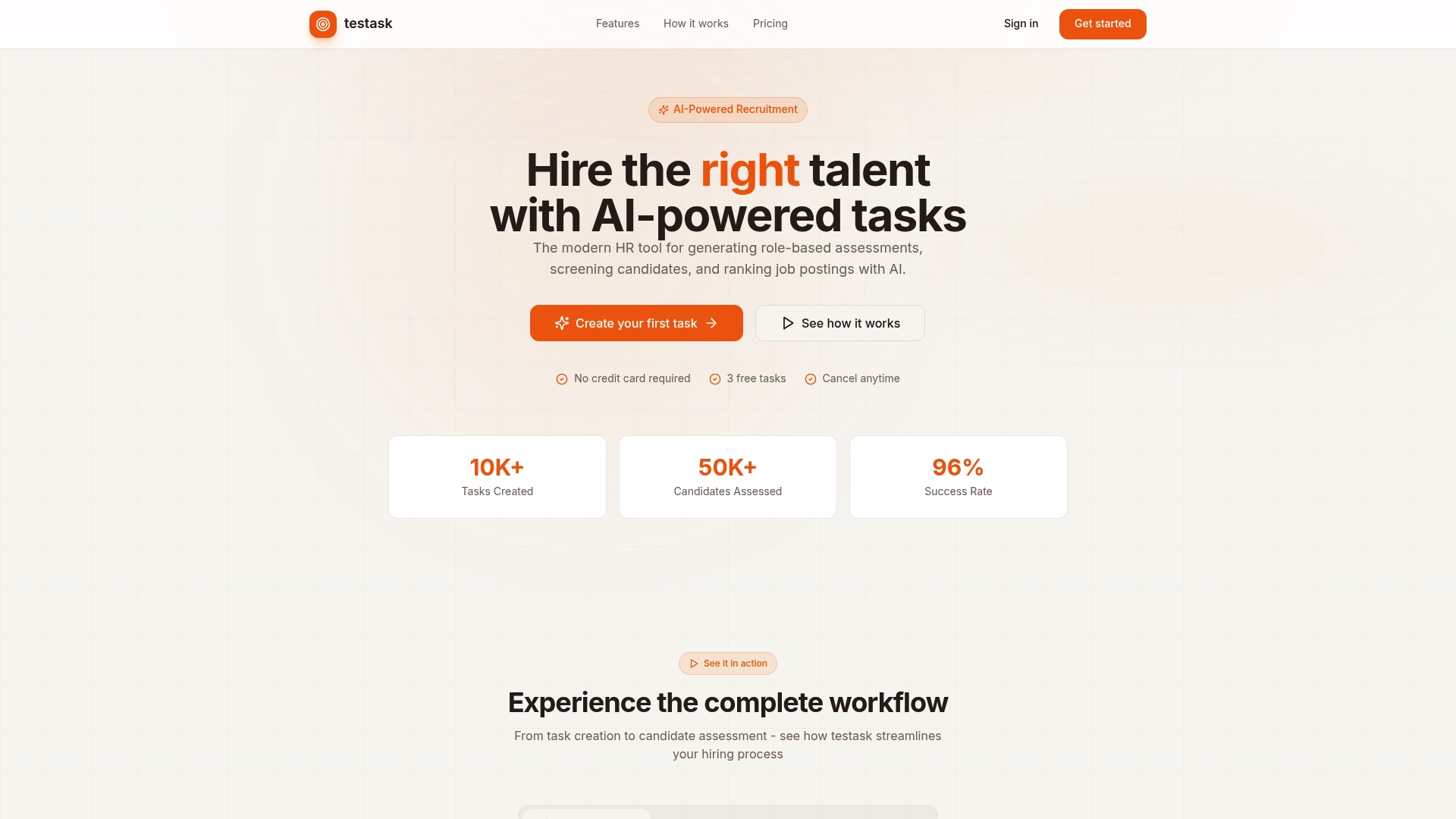
With Testask, you can generate tailored skill assessment tasks for any role, collect structured candidate submissions, and review results with AI-assisted analysis that highlights the signals that matter most. The platform gives your hiring team a shared workspace to score candidates consistently, reducing the subjectivity that corrupts funnel data. If you are ready to add real performance data to your recruitment metrics, Testask gives you the tools to do it without rebuilding your entire process from scratch.
FAQ
What is data-driven hiring?
Data-driven hiring is the practice of using measurable metrics and analytics to guide recruitment decisions rather than relying on intuition. Key metrics include time-to-hire, quality of hire, source effectiveness, and pipeline conversion rate.
How do I start tracking hiring metrics without expensive software?
Start by documenting candidate counts at each funnel stage in a shared spreadsheet. Consistent tracking of even basic stage data identifies pipeline leaks and gives you a baseline before investing in an applicant tracking system.
What is the difference between predictive and prescriptive recruiting analytics?
Predictive analytics forecast future hiring needs and candidate drop-off risk using historical data. Prescriptive analytics go further by recommending specific recruiter actions, such as when to follow up with a candidate or accelerate an offer.
How does AI help reduce bias in hiring?
AI acts as a partial mediator by surfacing objective, fact-based signals from candidate data, reducing the influence of emotional or subjective judgment. However, humans must retain final hiring decisions and audit AI tools regularly for demographic disparities.
What is the biggest mistake in metrics-driven talent acquisition?
The most common mistake is optimizing a single metric in isolation. Reducing time-to-hire without monitoring quality of hire, for example, creates pressure to rush decisions and produces poor hiring outcomes.
Recommended
- Candidate Screening Process Guide: Streamlined Hiring Steps | Testask Blog | testask
- What Is Predictive Hiring? A 2026 Guide for HR Teams | Testask Blog | testask
- Hiring process best practices: proven steps for better talent | Testask Blog | testask
- Recruitment assessment steps: your guide to bias-free hiring | Testask Blog | testask