What Is Automated Resume Screening? HR Guide 2026
What Is Automated Resume Screening? HR Guide 2026

Automated resume screening is the use of software to parse, filter, and rank job applications based on job-specific criteria before a human recruiter reviews them. Known in the industry as applicant tracking system (ATS) screening, it sits at the very first stage of the hiring funnel. Platforms like Workday and Greenhouse built this capability into their core ATS products years ago. Today, AI layers on top of that foundation with semantic matching and model-based scoring. The result is a system that can process hundreds of applications in minutes and hand recruiters a ranked shortlist instead of a raw pile of resumes.
What is automated resume screening and how does it work?
Automated resume screening parses resumes into structured fields such as name, skills, education, and work history, then scores and ranks each candidate against the job criteria. The process runs in four distinct stages, and understanding each one helps you configure the system correctly.
- Parsing. The software reads each resume file and converts it into structured data. Fields like job titles, dates, skills, and degrees get extracted and normalized. Poor parsing at this stage causes qualified candidates to disappear before scoring even begins.
- Feature extraction and normalization. The system maps extracted data to standardized categories. “Sr. Software Engineer” and “Senior SWE” get treated as the same role. This normalization step is what makes cross-candidate comparison possible.
- Scoring and ranking. Rule-based or model-based screening applies hard filters (must-have criteria) and soft scoring (weighted preferences) to generate a composite fit score. Candidates above a threshold move forward automatically.
- Human-in-the-loop review. Hybrid routing models auto-shortlist high-confidence candidates and send mid-confidence cases to a human reviewer. This step catches edge cases the model scores ambiguously.
- Semantic matching. Modern AI screening adds a layer beyond keyword matching. AI screening stages include parsing, semantic matching, ranking, and threshold filtration. Semantic models understand that “built machine learning pipelines” relates to a “data engineering” requirement even without exact keyword overlap.
Pro Tip: Test your parsing quality before you trust your rankings. Submit five known-qualified resumes in different formats (PDF, Word, plain text) and verify that all key fields extract correctly. Parsing errors are invisible until you audit them.
What are the benefits of automated screening for HR teams?

Automated resume filtering solves the volume problem that breaks manual hiring processes. ATS platforms help hiring managers find qualified applicants faster and fill positions sooner. That speed advantage compounds when you are running multiple searches simultaneously.
The core benefits for recruiting teams are:
- Volume handling. A system processes 500 applications in the time a recruiter reads 10. That capacity gap is why automated filtering became standard practice at high-volume employers.
- Reduced reviewer fatigue. Manual screening of large applicant pools degrades in quality after the first few dozen resumes. Automated pre-filtering means your team reviews only the candidates worth their attention.
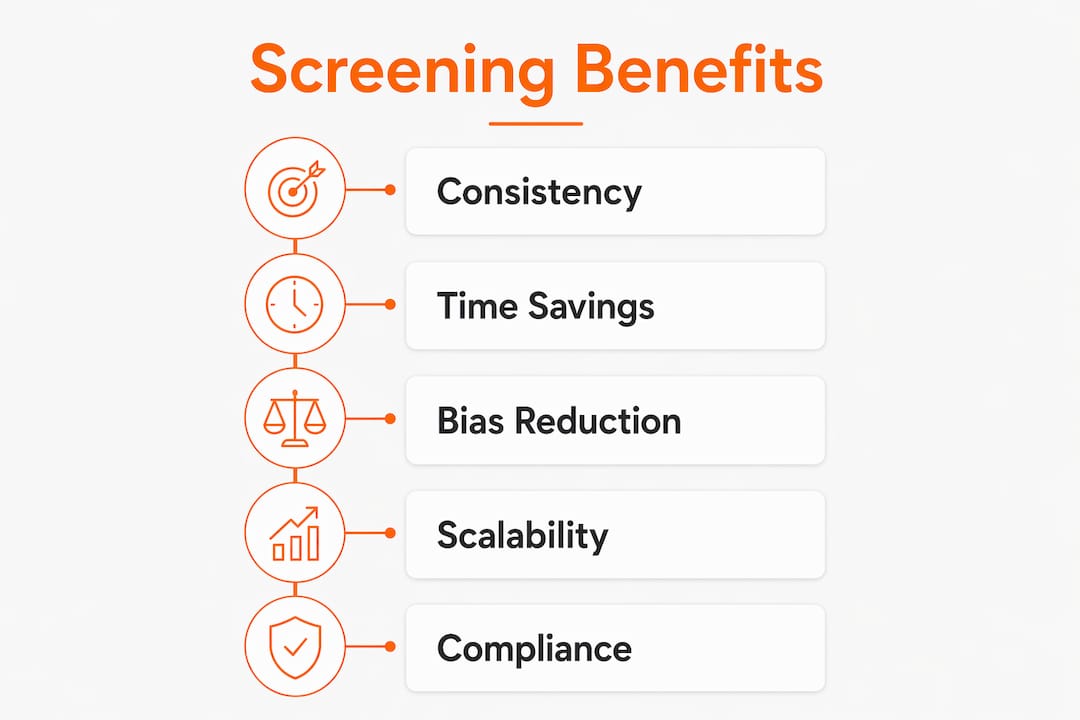
- Consistency. Every resume gets evaluated against the same criteria in the same order. That consistency is impossible to replicate manually across a team of three or more reviewers.
- Ranked shortlists. Recruiters receive candidates sorted by fit score, not by submission time. The best-matched candidates surface first, regardless of when they applied.
- Auditable scoring. Data-driven hiring decisions come with a record. You can show why a candidate advanced or was filtered out, which matters for compliance and internal accountability.
The consistency benefit deserves emphasis. Structured evaluation criteria credit only clearly documented qualifications. Automated systems apply that discipline at scale, removing the variability that comes from different reviewers applying different mental standards to the same resume.
What are the compliance and fairness considerations?
Automated screening tools influence hiring outcomes, and that influence creates legal exposure. Employers retain liability even when using third-party AI tools. Delegating screening to software does not transfer legal responsibility.
“Compliance emphasizes validation, job-relatedness, manual overrides, and risk management over vendor claims alone.” — Jackson Lewis on EEOC expectations for AI hiring tools
The key compliance requirements for HR teams using automated resume filtering include:
- Validation. Screening criteria must be demonstrably job-related. A filter that screens out candidates without a four-year degree for a role that does not require one creates disparate impact risk.
- Audit trails. Governance and auditability are required because screening directly influences selection outcomes. Maintain logs of scoring rules, thresholds, and any changes made over time.
- Candidate accommodations. Automated systems must account for candidates who cannot submit resumes in standard formats due to disability. A process that silently rejects non-standard submissions may violate accommodation requirements.
- Disparate impact monitoring. Run regular demographic analyses on your candidate flow. If a protected group passes the screening stage at a significantly lower rate, the criteria need review.
- Human override capability. No automated system should make final hiring decisions without a human check. Build manual review into your process for any candidate who requests reconsideration.
New York City’s Local Law 144 requires employers using automated employment decision tools to notify candidates and conduct annual bias audits. That law signals the direction of regulation nationally. HR teams should treat NYC compliance as a floor, not a ceiling.
How can recruiters get the most out of automated resume screening?
The quality of your screening output depends almost entirely on configuration, not on the sophistication of the AI model. Configuration of job criteria, thresholds, and parsing quality governs what the human reviewer actually sees. A poorly configured system with a powerful model still produces bad shortlists.
| Configuration area | Common mistake | Better practice |
|---|---|---|
| Job description wording | Generic titles and vague skill lists | Mirror the exact language candidates use in resumes |
| Must-have criteria | Treating preferences as hard filters | Reserve hard filters for true disqualifiers only |
| Score thresholds | Setting cutoffs too high to be safe | Calibrate thresholds against a sample of known-good resumes |
| Parsing field mapping | Accepting default field mappings | Audit and customize mappings for each role type |
| Human review routing | Sending only top-scored candidates to review | Route mid-confidence candidates to human reviewers |
Neglecting parsing and field mapping quality causes silent candidate suppression. A candidate with the right skills gets a low score because the parser misread their job title. You never see them. That is the most common and least visible failure mode in automated resume filtering.
Align your job description language with how candidates actually write their resumes. Small wording differences significantly impact candidate visibility in ATS searches. If your job description says “data visualization” but strong candidates write “Tableau dashboards,” the system may not connect them without semantic matching enabled.
Use hybrid routing for every search. Auto-shortlist candidates who score above your high-confidence threshold. Send mid-range scores to a human reviewer rather than auto-rejecting them. Hybrid approaches reduce false negatives and catch qualified candidates the model scores conservatively. Review your screening rules every 90 days and update them when a role’s requirements shift.
Pro Tip: Build a “calibration set” of 10 to 15 resumes from previous successful hires for each role type. Run new screening configurations against this set before going live. If your known-good candidates score below your threshold, your configuration needs adjustment, not your candidates.
For a deeper look at AI candidate screening methods and common pitfalls, the Testask blog covers the technical and practical sides in detail.
Key Takeaways
Automated resume screening works only as well as the parsing quality, scoring criteria, and human oversight built into the process.
| Point | Details |
|---|---|
| Parsing quality is foundational | Audit field extraction before trusting any ranking output. |
| Hybrid routing reduces missed candidates | Route mid-confidence scores to human reviewers, not auto-rejection. |
| Compliance is the employer’s responsibility | Validate criteria, monitor disparate impact, and maintain audit logs. |
| Configuration drives results | Align job description language with how candidates actually write resumes. |
| Consistency is the core benefit | Automated systems apply the same criteria to every application without fatigue. |
Automated screening changed how I think about recruiter skill
The most underappreciated shift automated screening creates is not speed. It is the change in what recruiter skill actually means. Before ATS screening, a skilled recruiter read resumes well. Now, a skilled recruiter configures systems well. Those are genuinely different competencies, and most hiring teams have not caught up to that reality.
I have seen teams invest heavily in AI scoring models while completely ignoring their parsing configuration. The model produces beautiful fit scores on garbage-extracted data. The shortlist looks clean, but the best candidates are not on it. The team never knows, because the failure is invisible.
The compliance piece is where I see the most overconfidence. Teams assume that because a vendor passed a bias audit, the tool is safe to use as-is. That is not how liability works. Your specific criteria, applied to your specific candidate pool, need their own validation. Vendor audits test the model in general. Your deployment is specific.
The screening process best practices that actually work share one trait: they treat automation as a first filter, not a final decision. The teams that get the most value from automated screening are the ones that use it to focus human judgment, not replace it. That balance is harder to maintain than it sounds, but it is the only version that holds up legally and practically.
— Pavel
Testask makes skills-based screening practical for hiring teams
Automated resume filtering tells you who looks qualified on paper. Testask tells you who actually performs. The platform lets you create tailored test tasks for any role, evaluate candidate submissions with AI-assisted analysis, and collaborate with your team on reviews in one place.
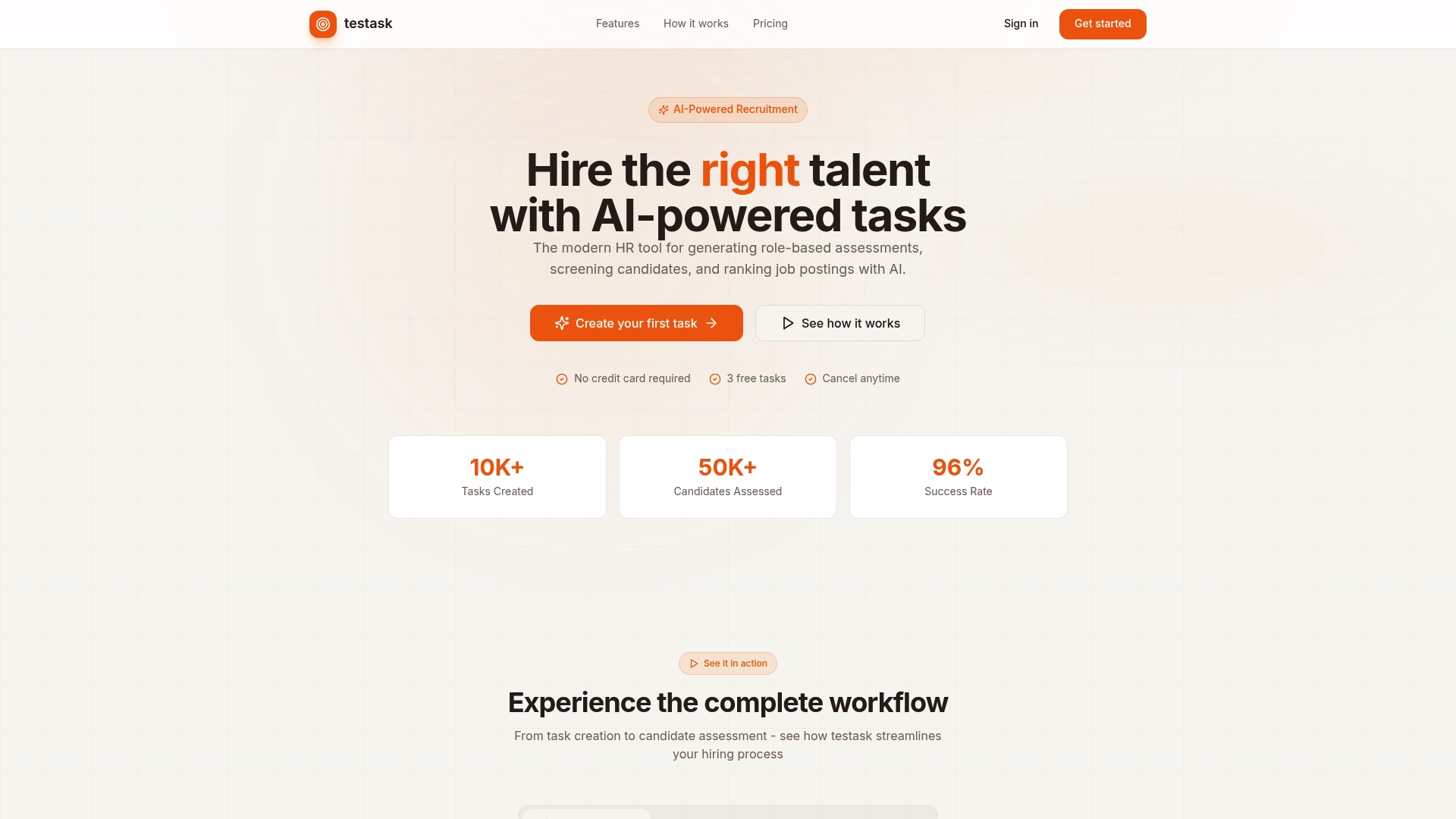
Where ATS screening ranks resumes by keyword and scoring rules, Testask adds a verified skills layer on top of that shortlist. Your recruiters spend time on candidates who have demonstrated ability, not just described it. The result is faster decisions and fewer costly mis-hires. HR teams at companies of all sizes use Testask’s AI-powered platform to move from resume review to real candidate evaluation without adding headcount to the process.
FAQ
What is automated resume screening?
Automated resume screening is software that parses job applications into structured data, scores candidates against job criteria, and produces a ranked shortlist before human review. It is typically built into applicant tracking systems like Workday or Greenhouse.
How does resume screening software decide who advances?
The system applies hard filters for must-have criteria and soft scoring for preferred qualifications, then ranks candidates by composite fit score. Candidates above a set threshold advance automatically; mid-range scores route to human reviewers.
What is the difference between rule-based and AI-based screening?
Rule-based screening applies fixed keyword and criteria filters. AI-based screening adds semantic matching and model scoring, connecting related terms and experience patterns that exact keyword filters would miss.
Is automated resume filtering legal?
Automated resume filtering is legal but creates employer liability. Employers must validate that screening criteria are job-related, monitor for disparate impact, and maintain audit trails. NYC Local Law 144 also requires candidate notification and annual bias audits for covered employers.
How can recruiters avoid losing qualified candidates to automated screening?
Audit your parsing configuration regularly, align job description language with how candidates write resumes, and route mid-confidence scores to human reviewers rather than auto-rejecting them. Calibrating thresholds against known-good resumes from past successful hires is the most reliable way to catch configuration errors early.
Recommended
- Candidate Screening Process Guide: Streamlined Hiring Steps | Testask Blog | testask
- HR Process Automation Explained for HR Leaders | Testask Blog | testask
- Build an effective recruitment checklist for HR success | Testask Blog | testask
- Why improve candidate screening? Efficiency, quality, AI | Testask Blog | testask