Candidate Feedback Process: Best Practices for 2026
Candidate Feedback Process: Best Practices for 2026

The candidate feedback process is a structured method of delivering timely, consistent, and constructive evaluation communications that improve hiring decisions and candidate experience. Most hiring teams treat feedback as an afterthought. That is a mistake. A well-designed process protects your employer brand, reduces legal risk, and gives your team the data it needs to make better decisions faster. The 2026 standard calls for tiered feedback policies, structured scorecards with anchored competencies, and ATS-integrated automation. Testask supports each of these components with AI-assisted evaluation tools built for HR teams and hiring managers who need speed without sacrificing quality.
What are the essential components of an effective candidate feedback process?
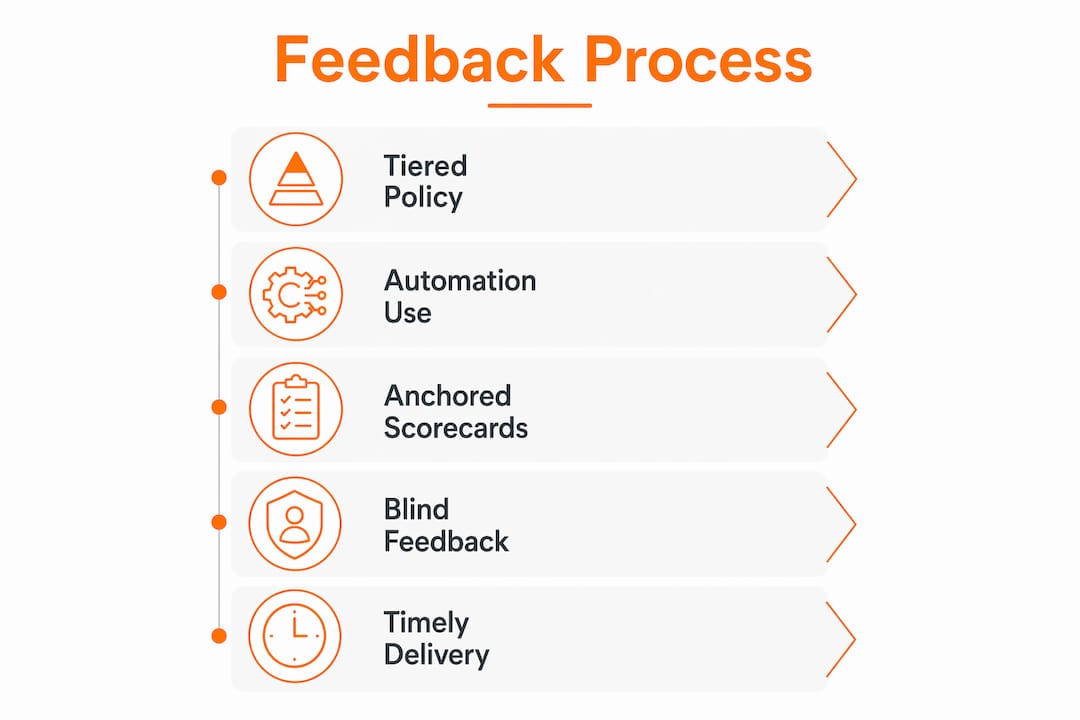
A tiered feedback policy is the foundation of any consistent process. The 2026 HR best practice recommends using automated messages for early-stage candidates and personalized, detailed feedback for final-round candidates. This removes the “case-by-case” paralysis that slows most teams down and replaces it with a clear decision tree every recruiter can follow.
Each tier should define who writes the feedback, what format it takes, and when it goes out. Without those three elements locked in, feedback becomes inconsistent and often gets skipped entirely.
The core components of a well-built process include:
- Feedback tiers by stage: Automated acknowledgment at application, templated status updates after screening, and personalized written feedback after final interviews.
- Structured scorecards: 4–6 clear competencies with anchored rating scales that take about 3 minutes to complete. This reduces subjective vagueness and keeps evaluations comparable across interviewers.
- Defined timelines: 24–48 hours for recruiter-stage feedback, 3–5 business days for formal interview feedback.
- Clear ownership: Each feedback type has a named owner, whether that is the recruiter, the hiring manager, or the panel lead.
- Feedback templates: Pre-approved language for common scenarios, including rejection, advancement, and hold status.
Pro Tip: Automation handles volume; personalization builds trust. Use templated messages for stages 1 and 2, then require a human-written paragraph for any candidate who reached a final interview. That balance keeps your process fast and your employer brand intact.
Structured scorecards deserve special attention. When competencies are anchored, meaning each rating level has a behavioral description, interviewers stop relying on gut feel. A “3 out of 5” means the same thing to every evaluator on your panel. That consistency is what makes your candidate evaluation feedback defensible and useful over time.

How to design structured scorecards for better evaluation quality
Scorecards work when they are built around the right criteria and kept short enough that interviewers actually complete them. Follow these steps to build one that holds up under pressure:
- Select 4–6 competencies per role. More than six creates fatigue and inconsistency. Choose competencies that directly predict job performance, not generic traits like “communication” without context.
- Anchor each rating level with a behavioral description. A 1 should describe what poor performance looks like in that competency. A 5 should describe an exceptional, specific behavior. Anchors remove ambiguity.
- Add a notes field tied to each competency. Interviewers should record the specific question asked, the candidate’s response, and any follow-up. Timestamped interview notes with candidate quotes prevent feedback degradation and subjective error over time.
- Keep total completion time under 3 minutes. A scorecard that takes 10 minutes gets skipped. One that takes 3 minutes gets done within the hour.
- Use blind feedback submission. Hide each evaluator’s scores until all panel members have submitted. Blind feedback reduces anchoring bias and groupthink by up to 28%, producing more varied and honest scoring patterns.
“Effective feedback reads like a story of the interview, citing specific questions, candidate responses, and the reasoning behind judgments. That transforms feedback from vague opinions into factual hiring justifications.”
The blind feedback point is worth emphasizing. When the first evaluator submits a strong positive score and others can see it, subsequent evaluators unconsciously align. Hiding scores until everyone submits breaks that pattern and gives you a cleaner picture of where the panel actually agrees or disagrees.
Scorecard design also has a legal dimension. Evidence-based evaluations tied to specific competencies are far easier to defend than notes that say “not a culture fit.” Keep the language behavioral and job-related throughout. For a deeper look at anchored rating scales, Testask’s hiring guides cover the mechanics in detail.
How to optimize timing and delivery of candidate feedback
Timing is where most feedback processes break down. The gap between interview and feedback is where employer brand erodes and candidates accept other offers. The recommended delivery windows are 24–48 hours for recruiter feedback and 3–5 business days for formal interview feedback.
Specific timing choices matter more than most teams realize:
- Avoid Friday rejections. Candidates receive bad news heading into a weekend with no ability to act on it. Tuesday through Thursday, mid-morning, is the best window for any feedback delivery.
- Set ATS-triggered reminders. When a candidate’s status changes in your ATS, an automatic reminder should fire to the responsible evaluator within 24 hours.
- Use hard stops. ATS workflow hard stops require completed feedback before a candidate can be moved to the next stage. This is more effective than reminders alone because it creates a process gate, not just a nudge.
- Assign a feedback deadline to every interview. The deadline should appear on the calendar invite so interviewers see it before the conversation even starts.
Pro Tip: Pair ATS automation with a weekly accountability report sent to hiring managers. The report shows which interviewers have outstanding feedback and how many days overdue it is. Public accountability moves faster than private reminders.
The hard stop approach deserves more adoption than it currently gets. Most teams rely on email reminders, which are easy to ignore. A hard stop inside your ATS means the recruiter cannot advance a candidate until the scorecard is complete. That single change can cut average feedback submission time significantly. For teams building out their hiring process best practices, ATS integration is the highest-leverage place to start.
How to craft candidate-facing feedback messages that are clear and legally safe
Internal scorecards and external feedback messages serve different purposes. Separating raw internal notes from external communications improves both legal safety and communication professionalism. Your internal scorecard is evidence. Your external message is a professional communication. They should never be the same document.
When writing external feedback for job applicants, apply these principles:
- Always include at least one positive point. Even in a rejection, name something the candidate did well. This is not just courtesy. It reduces the likelihood of a negative response and protects your employer brand on review platforms.
- Reference a specific interview moment. Vague feedback like “we found a stronger candidate” tells the applicant nothing. Referencing a specific competency or exchange gives them something real to work with.
- Avoid language that implies protected-class reasoning. Stick to job-related competencies and observable behaviors. Phrases like “not the right fit” without elaboration create legal exposure.
- Keep it concise. Three to five sentences is the right length for most external feedback messages. Longer messages invite debate; shorter ones feel dismissive.
A useful framework for professional candidate communication is: positive observation, specific development area, and clear next step. That structure works for rejections, holds, and advancement messages alike. It keeps the tone constructive without overpromising.
The legal risk in feedback messages is real and underappreciated. Hiring teams that use behavioral, competency-based language consistently are far better protected than those who rely on impressionistic notes. Build your templates around the same competency language that appears in your scorecards. That alignment creates a defensible paper trail from interview to decision.
Key Takeaways
A structured candidate feedback process built on tiered policies, anchored scorecards, and ATS automation produces faster hiring decisions, stronger employer brand, and legally defensible evaluations.
| Point | Details |
|---|---|
| Use a tiered feedback policy | Automate early-stage messages and reserve personalized feedback for final-round candidates to ensure consistency. |
| Build scorecards with 4–6 anchored competencies | Behavioral anchors make ratings comparable across evaluators and keep completion time under 3 minutes. |
| Apply blind feedback submission | Hiding scores until all evaluators submit reduces groupthink and produces more honest, independent assessments. |
| Deliver feedback within defined windows | Send recruiter feedback within 24–48 hours and interview feedback within 3–5 business days to protect employer brand. |
| Separate internal notes from external messages | Keep raw evaluation data internal and craft external communications around competency-based, legally safe language. |
What I have learned about scaling feedback in fast-moving hiring teams
The hardest part of building a good feedback process is not the design. It is the ownership problem. Every team I have seen struggle with feedback delays has the same root cause: nobody is clearly accountable for making sure it happens. Recruiters assume hiring managers will submit. Hiring managers assume the recruiter will follow up. The candidate waits.
The fix is simple but uncomfortable. Assign a named owner to every feedback type and make that ownership visible. When a hiring manager knows their feedback submission rate appears in a weekly report, behavior changes fast. Accountability at the individual level works better than team-level goals.
The second thing I have learned is that automation is not a replacement for judgment. It is a scaffold. The teams that get this right use automation to handle volume and enforce deadlines, then protect human attention for the moments that actually matter, specifically final-round candidates who deserve a real conversation about where they stood. That balance is what separates a process that scales from one that just feels efficient on paper.
Measuring feedback quality over time is the piece most teams skip. Track feedback submission rates, average delivery time, and candidate satisfaction scores from post-process surveys. Those three metrics tell you whether your process is working or just running. Continuous improvement in candidate evaluation workflows requires data, not assumptions.
— Pavel
How Testask supports your candidate feedback workflow
Testask gives HR teams and hiring managers the tools to build a structured, consistent feedback process without adding administrative overhead.
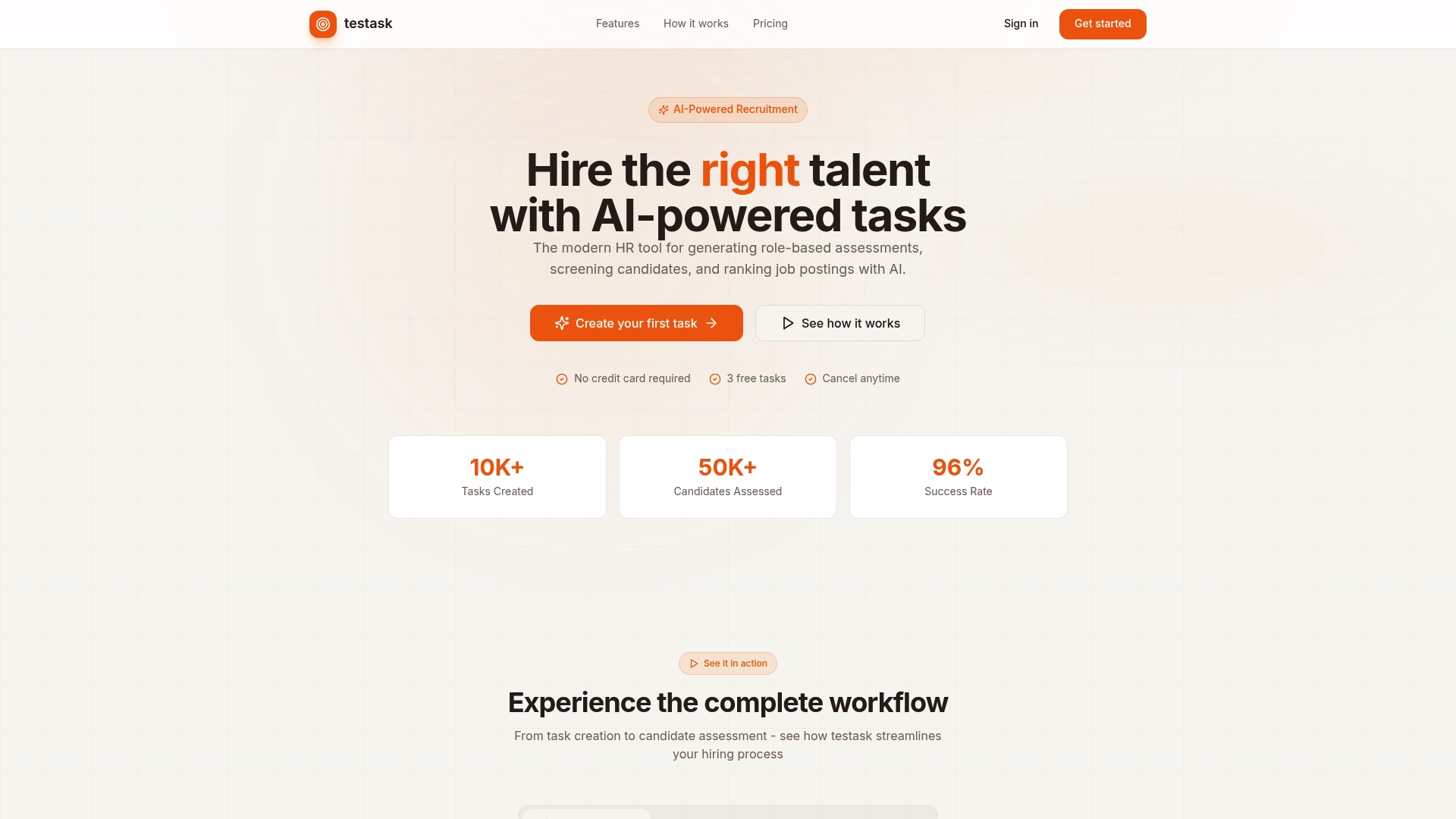
Testask’s AI-powered platform lets you create tailored scorecards with anchored competencies, collect blind evaluations from your panel, and generate structured feedback summaries from candidate submissions. The platform integrates with your existing workflow to trigger reminders and enforce submission deadlines, so feedback happens on schedule rather than whenever someone remembers. Teams using Testask report faster review cycles and more consistent hiring decisions across roles and locations. If you are ready to replace ad hoc feedback with a process that actually holds, explore Testask’s assessment tools and see how it fits your hiring workflow.
FAQ
What is a candidate feedback process?
A candidate feedback process is a structured system for delivering timely, consistent, and competency-based evaluation communications to job applicants at each stage of hiring. It covers both internal scoring and external candidate-facing messages.
How soon should you send interview feedback to candidates?
Send recruiter-stage feedback within 24–48 hours and formal interview feedback within 3–5 business days. Avoid sending rejections on Fridays; mid-morning Tuesday through Thursday is the best delivery window.
What should a candidate feedback scorecard include?
A scorecard should include 4–6 job-relevant competencies, each with anchored behavioral rating descriptions, a notes field for specific candidate responses, and a completion target of under 3 minutes.
How does blind feedback improve hiring decisions?
Blind feedback hides each evaluator’s scores until all panel members have submitted, which reduces anchoring bias and groupthink by up to 28% and produces more independent, honest assessments.
What is the difference between internal feedback and external candidate messages?
Internal feedback is raw, evidence-based documentation used for hiring decisions. External messages are professionally crafted communications that reference specific competencies and always include at least one positive observation, even in rejections.